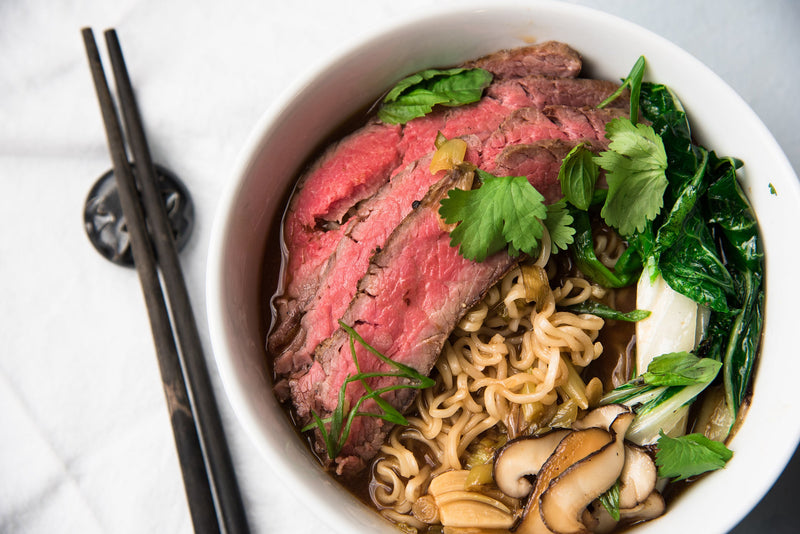
How to Slice Steak Against the Grain
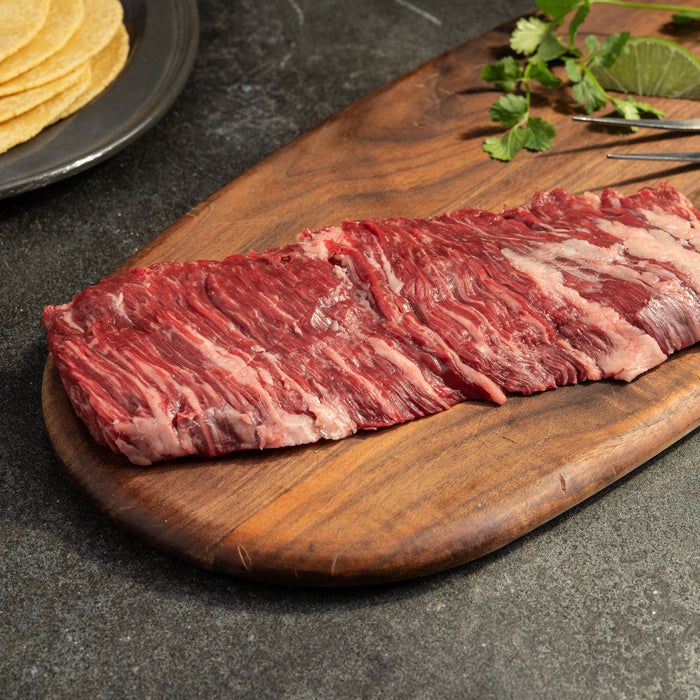
Cook it with 44 Farms: USDA Choice Outside Skirt Steak| Table of Contents |
|---|
| 1. What Is the Grain? |
| 2. Find the Grain |
| 3. How to Slice |
| 4. Cut by Cut |
| 5. Mistakes |
| 6. Frequently Asked Questions |
Key Takeaways
- The grain is the direction the muscle fibers run; you want to cut across them
- Cutting against the grain turns long, chewy fibers into short ones
- It matters most on flank, skirt, hanger, bavette and tri-tip
- Rest first, use a long sharp knife, and slice on a slight angle

You can cook a steak perfectly and still make it chewy with one wrong cut. Slicing against the grain is the simplest thing you can do to make a steak eat more tender, and it costs nothing. It's the difference between fajitas that pull apart and fajitas you're chewing on for a minute. Here's how to find the grain and cut it right.
What Is the Grain on a Steak?
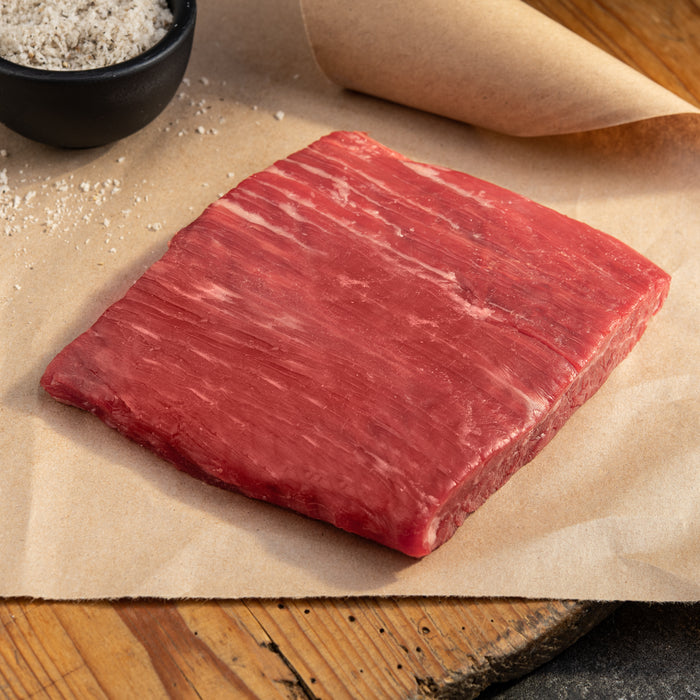
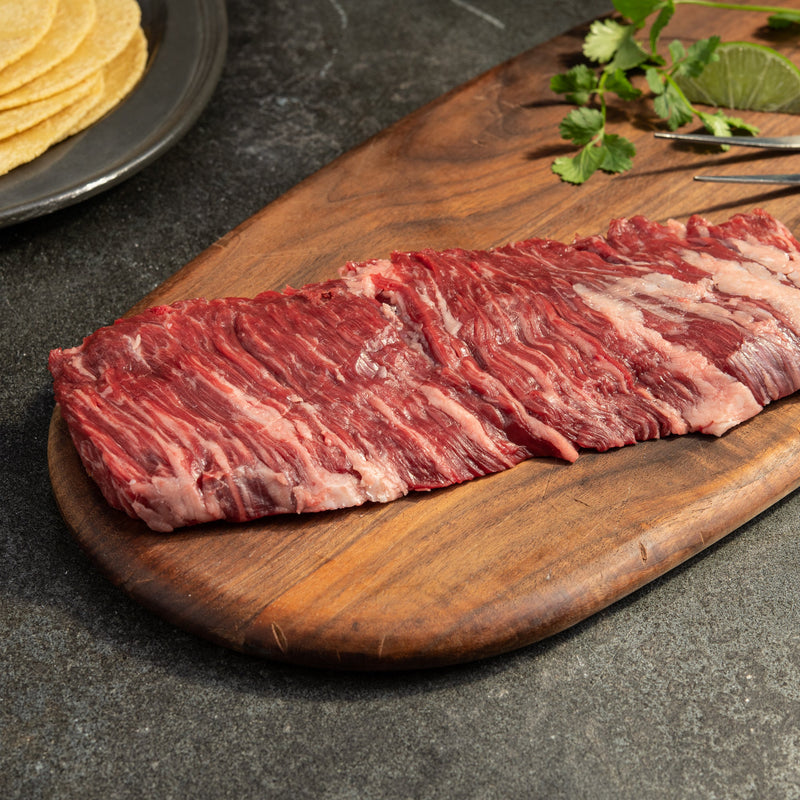
Steak is muscle, and muscle is made of long fibers bundled together, all running the same direction. Those lines you can see across the surface of a flank or skirt steak are the grain. Cut along those fibers and every bite is full of long strands your teeth have to work through. Cut across them and you've already done most of the chewing with the knife.
How to Find the Grain
- Look at the raw steak before you cook it. The lines are easiest to see then. Make a small notch on one end, across the grain, as a reminder.
- On a cooked steak, look at the surface for parallel lines, or cut a small piece off the end and look at the cut face.
- If the strands you see in the cut are long, you cut with the grain. Turn the steak 90 degrees.
How to Slice Steak Against the Grain
- Rest the steak first, 5–10 minutes. Slicing straight off the heat pushes the juice onto the board.
- Use a long, sharp knife. A slicer or chef's knife. A dull knife tears the fibers instead of cutting them.
- Turn the steak so the grain runs left to right in front of you.
- Cut straight down, across the lines. For thin cuts, tilt the knife about 45 degrees. A bias cut makes each slice wider and even more tender.
- Go thin on tough cuts. About a quarter inch for flank and skirt. Ribeyes and strips can be cut thicker.
Cut-by-Cut Guide
| Cut | How the grain runs | Tip |
|---|---|---|
| Flank | Lengthwise, very visible | Slice thin on a bias. Matters a lot. |
| Skirt | Across the short width | Cut the long steak into 4–5 inch sections first, turn each one, then slice across. |
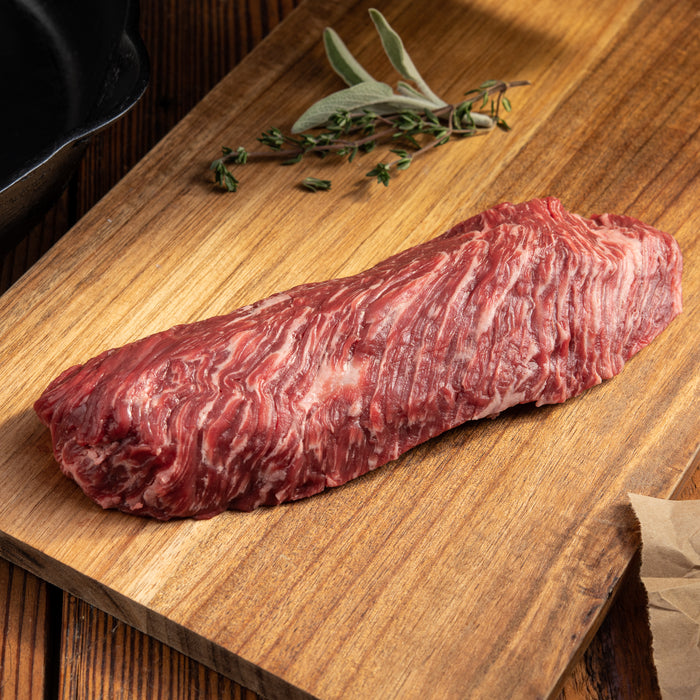
| Hanger | Diagonal on each half | Cut out the center sinew first, then slice each half separately. |
| Bavette | Loose and open | Slice thin, across the lines. |
| Tri-tip | Changes direction partway | Cut it in half where the grain shifts, then slice each half across. |
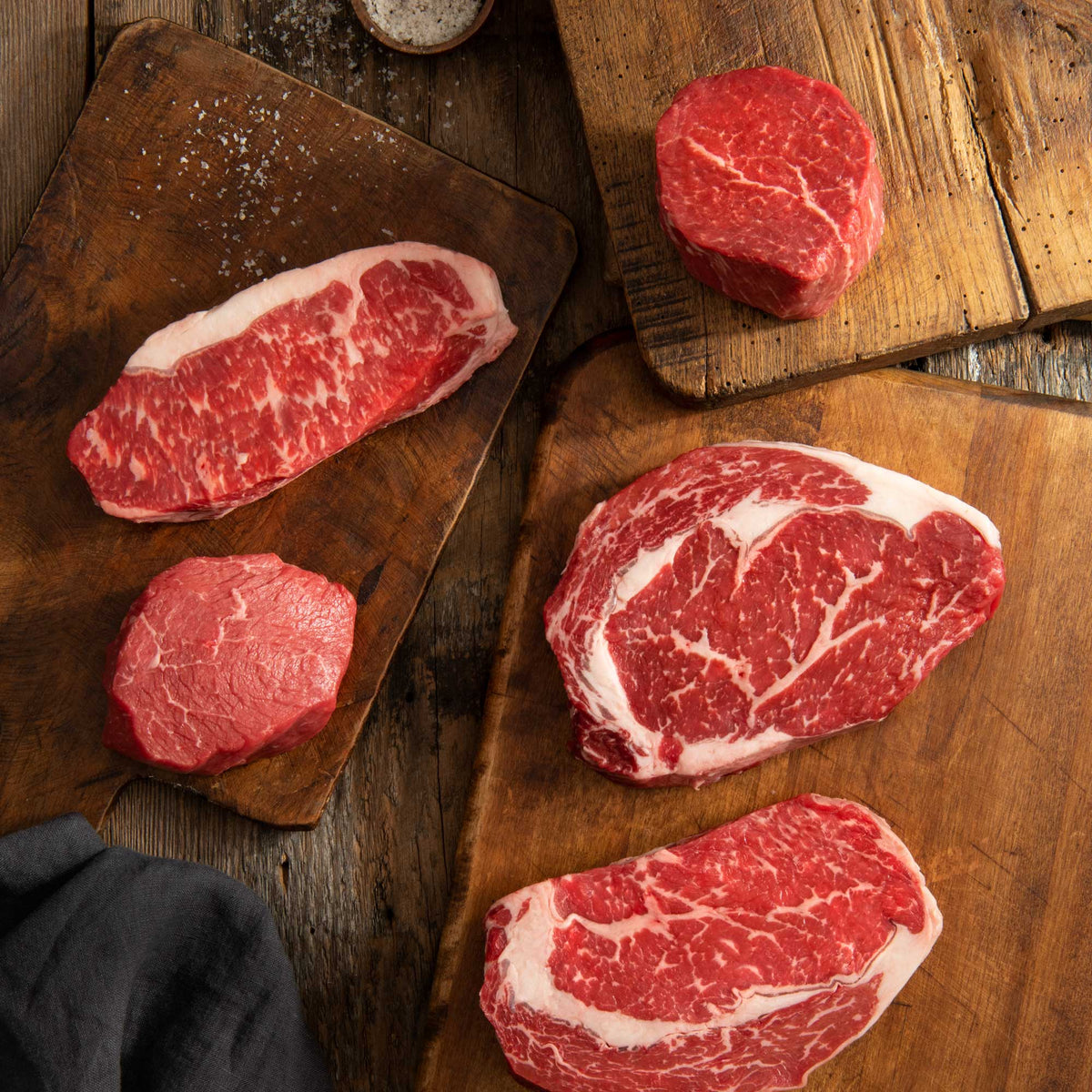
| Ribeye / strip | Across the short side | Less critical. Slicing a strip into strips for sharing: cut across the width. |
| Brisket | Flat and point run different ways | See how to slice brisket. |
Common Slicing Mistakes
- Not resting first.
- A dull knife that saws and shreds.
- Cutting skirt steak the long way because it's easier to hold.
- Slicing a tri-tip all in one direction.
- Cutting flank too thick.
Put Your Knife Skills to Work
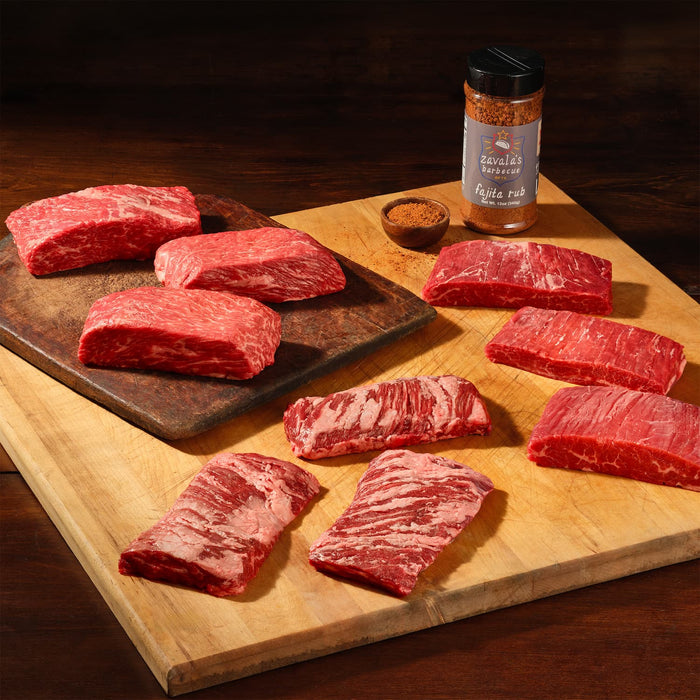
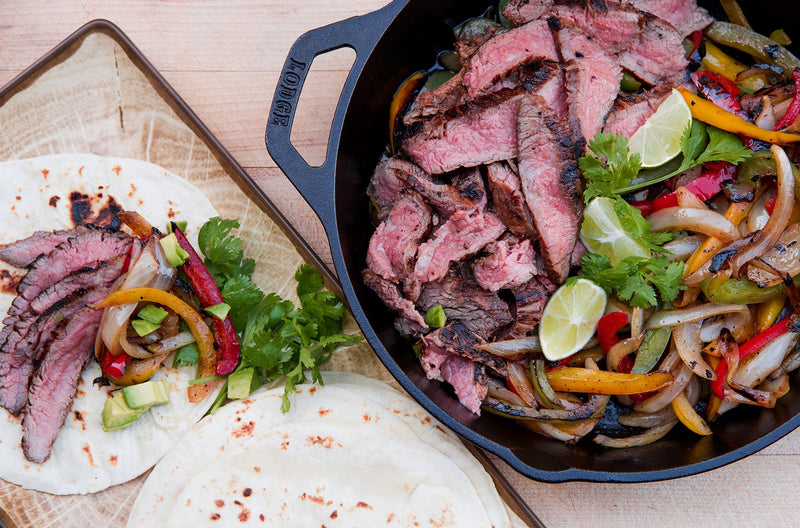
Flank, skirt and hanger are where slicing right pays off the most. Try the Ultimate Fajita Bundle or a single flank steak, then make our flank steak fajitas.
Shop Skirt, Flank & HangerFrequently Asked Questions
What does slicing against the grain mean?
It means cutting across the muscle fibers instead of along them. You end up with short fibers in each bite, which makes the steak eat more tender.
Does it matter which way you cut a steak?
Yes, especially on flank, skirt, hanger, bavette and tri-tip, which have long, visible fibers. On a ribeye or filet it matters less, but it still helps.
How thin should you slice flank steak?
About a quarter inch, on a 45-degree angle against the grain.
Should you let steak rest before slicing?
Yes. Rest it 5 to 10 minutes. Cutting right away lets the juice run out onto the board.