
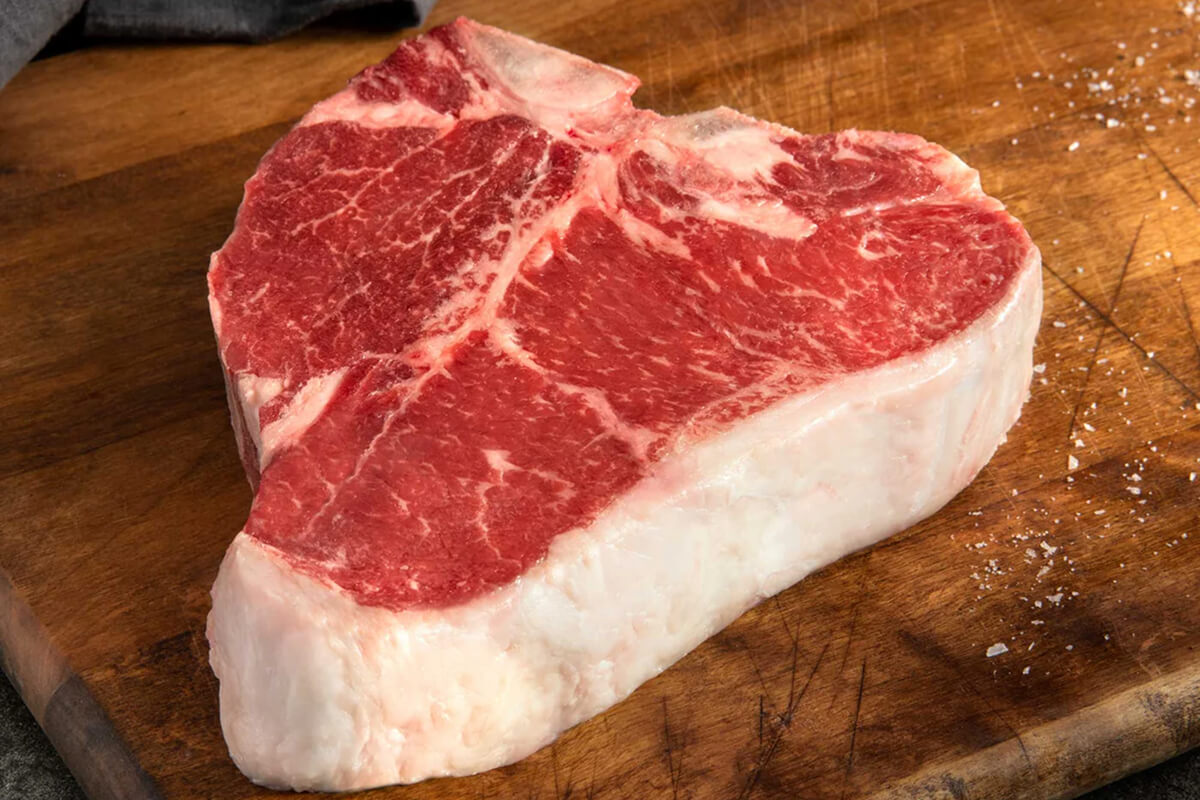
What Is a Porterhouse Steak?

If you’re looking for a steak cut that delivers on both size and flavor, you can’t miss with the decadent Porterhouse cut. Combining the rich flavor of the strip steak with the ultra-rich tenderness of filet mignon, this two-in-one steak makes the perfect centerpiece for any meal. Great on the grill or cooked to perfection using the reverse sear method, our Porterhouse steak offers a complex, beefy flavor profile that is sure to make any steak lover rejoice.
In this blog, learn more about where the Porterhouse comes from and what makes it a standout cut of meat.

Where Does the Porterhouse Cut Come From?
The Porterhouse cut comes from a primal region of the cow known as the short loin, which is located towards the rear of the cow between the ribs and sirloin. This is an area with muscles that generally perform less work, which results in tender, well-marbled beef.
Two Steaks in One
Did you know that Porterhouse steaks are actually two steaks combined? The Porterhouse cut comes from the part of the cow where two areas meet: the tenderloin and the top loin, separated by a T-shaped bone. The top loin is actually where New York strip steak comes from, and the tenderloin section is where we get the buttery, ultra-tender filet mignon cut. With a Porterhouse cut, you get the best of both worlds!
Porterhouse vs. T-Bone Steaks: What’s the Difference?
The Porterhouse cut often gets compared to the T-bone steak, because both cuts feature that distinctive T-shaped bone as well as filet and strip steak portions. But the difference between these two premium cuts lies in the tenderloin portion. The tenderloin muscle has minimal fat or connective tissue and offers some of the most tender, buttery bites when it comes to enjoying steak.
T-bone steaks are cut from the front, whereas Porterhouse steaks are cut from the rear. That means the size of each cut’s filet is different. In a Porterhouse cut, the tenderloin portion is much larger, making it a leaner, more tender cut of meat overall.
Why Steak Lovers Buy the Porterhouse Cut
Let’s break down why Porterhouse steaks are a beloved American steakhouse classic.
Flavor Profile
Porterhouse steak is favored for its rich, beefy taste. The presence of the T-shaped bone at the center is responsible for the cut’s rich flavor. What really makes the Porterhouse cut memorable is its composite structure. You get to enjoy the taste of both the filet mignon and the strip steak, and each part of the meat gets to shine. The filet offers unbeatable tenderness, while the strip steak bursts with beefy flavor.
Texture & Tenderness
The Porterhouse cut features fat marbling with a firm but tender texture. When cooked properly, it should have a slight char on the outside and a juicy center on the inside that gives the perfect balance of flavor and texture. When you’re cooking a Porterhouse, be prepared with a big appetite! Two steaks in one means big portions that make for a delicious, satisfying meal.
How to Cook & Serve Porterhouse Steak
The Porterhouse needs very few bells and whistles to make the most of its rich, beefy flavor. A generous seasoning of salt and pepper will do the trick.
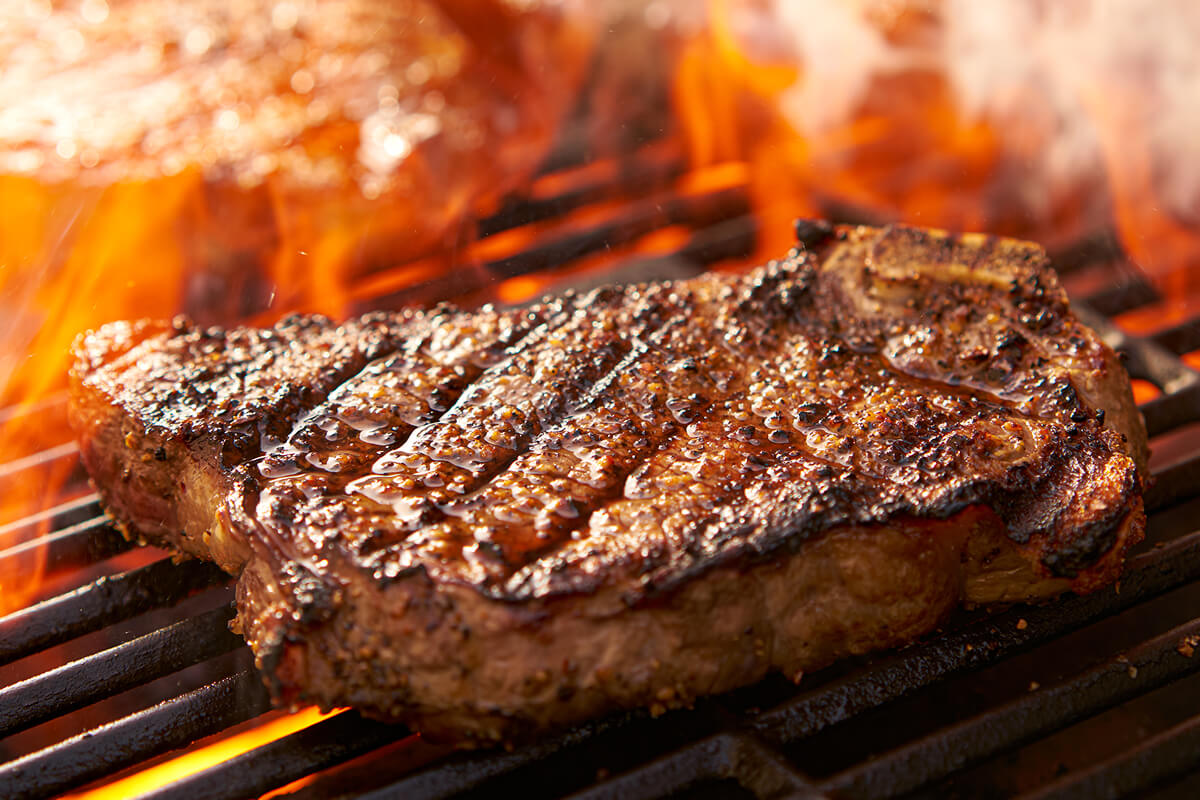
Reverse searing will get you a perfectly cooked Porterhouse steak with a delicious crust that provides a nice contrast to the soft, tender center. Simply cook it low and slow in the oven until the internal temperature is just five degrees lower than your target doneness, and then finish it in a hot cast-iron skillet by searing all sides over high heat.
For those who love a nice smoky char on their steaks, grilling your Porterhouse steak is also a great option.
Best Pairings for Porterhouse Steak
The great thing about a Porterhouse steak is that its bold, beefy flavor can stand on its own. But for a nicely balanced entree, consider these pairings:
-
Sides: The crispy crust and bold flavor of the Porterhouse cut pair well with creamy textures, acidity, or crunch. Try your steak with a classic mashed potato side, or jazz things up with our cheesy Scalloped Potatoes. Leafy green salads with a tangy vinaigrette also work well here.
Order Porterhouse Steak from 44 Farms
For melt-in-your-mouth tenderness and rich, bold flavor, order 44 Farms’ 30 oz USDA Porterhouse Steak. Like all of our steaks, our Porterhouse cuts are free of added hormones and antibiotics and wet-aged for 28 days, resulting in all-natural primal cuts that are extremely tender.
Order Your Porterhouse Steak TodayFrequently Asked Questions
Which cut is bigger, Porterhouse or T-bone?
Porterhouse steaks are cut thicker than T-bone steaks and offer a significantly larger tenderloin filet relative to the strip portion than the T-bone cut. Generally, T-bones have a tenderloin length less than 1.24 inches, whereas Porterhouses have a tenderloin length of 1.25 inches or greater.
Is it better to serve Porterhouse steak medium rare?
We strongly recommend medium rare for all of our steaks, especially the Porterhouse cuts. Leaving the center pink allows for the full flavor of the filet mignon to come through. The target temperature for medium-rare steak is 126–130°F.
How to reheat cooked Porterhouse steak?
When reheating, you want to avoid overcooking. The best way to reheat steak is to use a sous vide method. However, you can also reheat the Porterhouse over low heat in a skillet with a little butter or beef broth. Avoid the microwave at all costs, as this will dry out your steak and ruin the texture.

Leave a comment
This site is protected by hCaptcha and the hCaptcha Privacy Policy and Terms of Service apply.