Best Steaks for a 4th of July Cookout
| Table of Contents |
|---|
| 1. Ribeye |
| 2. Porterhouse |
| 3. New York Strip |
| 4. Top Sirloin |
| 5. Skirt Steak |
| 6. Flank Steak |
| A Few Grilling Tips |
| Why 44 Farms |
| FAQs |

The 4th of July is one of those rare days when nobody needs to be talked into cooking outside. The grill is already hot. The cooler is already cold. The only real question is what goes on the grates.
Burgers are fine. But if you want to make this cookout one people actually talk about, you need steak. The right steak. And that decision matters more than most people realize, because not every cut is built for backyard grilling in the Texas heat.
Here's a breakdown of the best steaks for your July 4th cookout, what makes each one work, how to make the most of them, and why 44 Farms is your prime source for Black Angus beef this side of the Chisholm Trail.

1. Ribeye: The Showstopper
If you're going to grill one steak this Independence Day and you want it to be unforgettable, this is it.
The ribeye comes from the rib section of the cow, a part of the animal that does very little work. That matters because unused muscle develops intramuscular fat, and intramuscular fat is where all the flavor lives. When that fat hits a screaming-hot grill, it melts right into the meat. What you get is a steak that bastes itself as it cooks.
The 44 Farms USDA Prime Boneless Ribeye is available in 12 oz and 16 oz cuts from all-natural, hormone-free Black Angus cattle, wet-aged for 28 days before it ships to your door. It doesn't need much. Kosher salt, cracked pepper, and high heat are all you really need to let the beef do the talking.
Season it. Let it come to room temperature for 30 to 45 minutes. Sear it over direct, ripping-hot heat for a solid crust, then let it rest a full 5 to 10 minutes before you cut it.
That's the play. Don't overthink it.

2. Porterhouse: The Two-for-One
The Porterhouse is the steak you put on the table when you want someone's eyes to go wide the moment they see it.
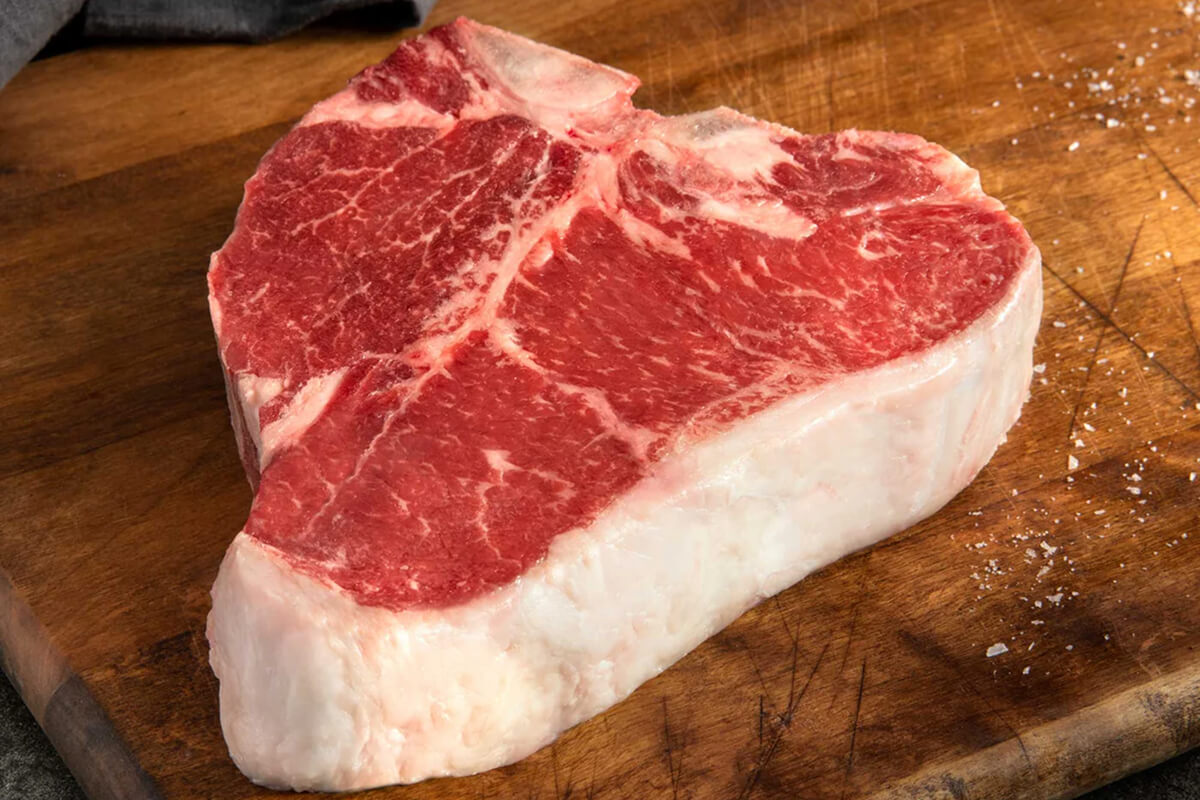
It's a 30 oz cut from the short loin that gives you two steaks in one: a New York Strip on one side of the T-bone and a generous filet mignon on the other. The distinction between a Porterhouse and a T-bone is that tenderloin portion. A Porterhouse has a larger filet, which makes it the superior cut of the two.
The 44 Farms USDA Choice Porterhouse is an impressive centerpiece, whether you plan to serve it whole or slice it tableside and pass it around. If you're hosting a group and want to make a real impression without grilling 12 individual steaks, this is how you do it.
For cooking, a reverse sear works especially well on a cut this thick. Start it low and slow until the internal temp is about five degrees shy of your target, then finish it over screaming-hot direct heat to build that crust. Rest it before you cut.

3. New York Strip: The Reliable Crowd-Pleaser
There's a reason the New York Strip has been on steakhouse menus for generations. It just works.
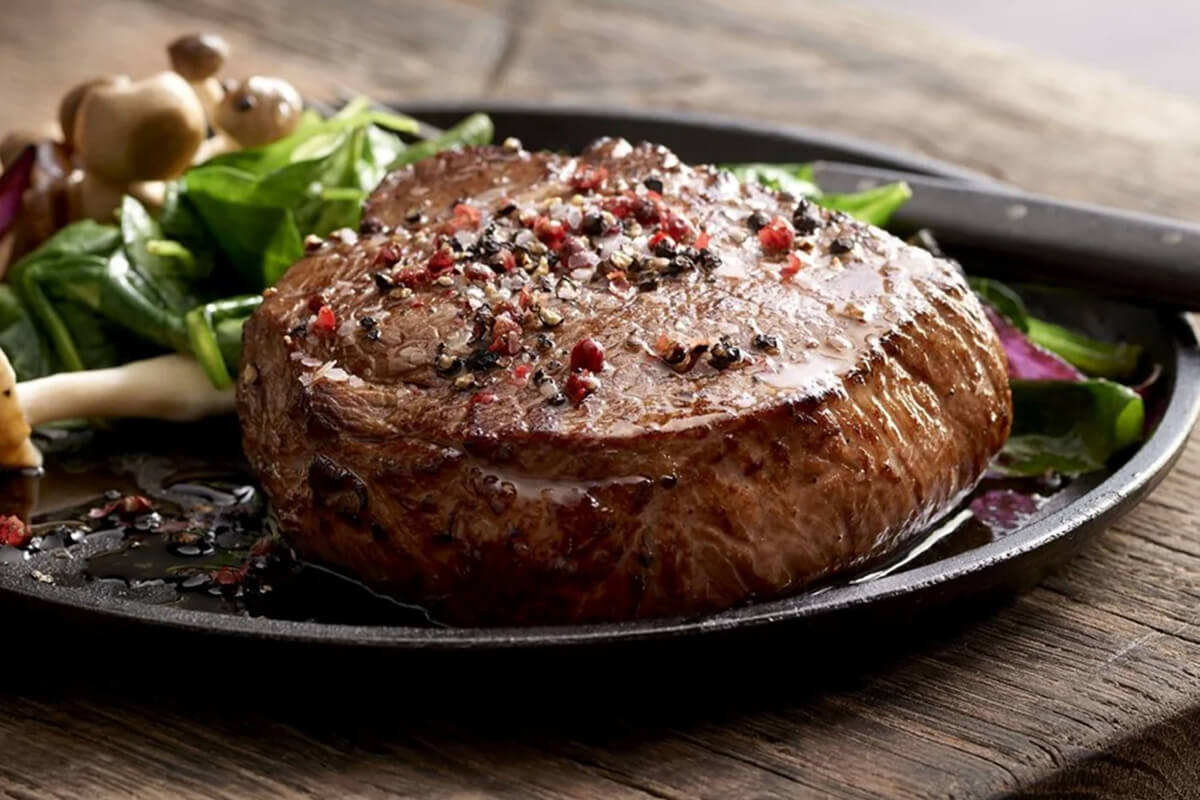
Cut from the short loin, the strip offers a great balance of bold beef flavor and tenderness without leaning too far in either direction. It has enough marbling to stay juicy but a firmer texture that holds up well over open flame. It also cooks evenly and consistently, which matters when you're managing multiple steaks on the grill at once.
The 44 Farms USDA Prime New York Strip is available in 10 oz and 14 oz cuts, both wet-aged for 28 days. Season generously with salt and pepper, give it 30 minutes at room temperature, then sear it over direct heat for 3 to 4 minutes per side. Move it to indirect heat if needed to finish to your preferred temp (130°F for medium-rare), and let it rest before slicing against the grain.
If you have guests who are newer to steak, this is a great choice. It's hard to go wrong with a Strip.

4. Top Sirloin: The Crowd-Feeding Workhorse
Top Sirloin is the cut that makes a big cookout work without blowing the budget or losing quality. It comes from the primal loin, cut into a thick, round baseball-style portion that grills beautifully and holds a serious amount of flavor for a leaner cut. Because it's not as heavily marbled as a ribeye or strip, it benefits from a marinade, and it takes to marinades exceptionally well. Olive oil, garlic, soy sauce, balsamic vinegar, and fresh herbs left to work for 4 to 8 hours in the fridge will do something special to this cut.
The 44 Farms USDA Prime Top Sirloin is available in 6 oz and 8 oz cuts, which means you can put a lot of steaks on the table for a large group without sacrificing the fact that you're serving all-natural, hormone-free Black Angus beef. That's worth something, especially when you're feeding a crowd.
Sear over high heat, finish to 130°F for medium-rare, and rest before serving.

5. Skirt Steak: The Fajita MVP
If your 4th of July cookout has a Tex-Mex angle to it, skirt steak isn't a suggestion. It's a requirement.
Skirt steak comes from the plate section, just below the rib. It has a looser grain than most other cuts and an incredibly intense, beefy flavor that crisps up beautifully when it hits a hot surface. That open grain also makes it exceptional for marinades, though honestly it doesn't need much help. The flavor is already doing a lot of work on its own.
The 44 Farms USDA Choice Outside Skirt Steak comes in 8 oz cuts, available in quantities built for feeding a crowd. The key to cooking it right is simple: get the grill as hot as it will go, cook it fast, and slice it thin against the grain. That is it. Load up warm tortillas, throw some grilled onions and peppers alongside it, and you have a plate that disappears fast.

6. Flank Steak: The Lean and Flavorful Finisher
Flank steak is the leanest cut on this list, and that's actually the point.
It comes from the lower abdominal area, a well-worked muscle with visible grain and a strong, savory beef flavor. Because it's leaner, it's the best candidate for a bold marinade, which it absorbs deeply overnight. Once it hits the grill, it cooks fast and picks up a char that complements whatever you have been soaking it in.
The 44 Farms USDA Choice Flank Steak is an 8 oz cut that's one of the more affordable options on this list, making it a smart move when you need to feed a lot of people and still want something worth eating. It works for fajitas, steak salads, rice bowls, or sliced thin over the top of whatever else is on the table.
Same rules as skirt: high heat, quick cook, rest it, slice against the grain.
A Few Grilling Tips Worth Repeating
Bring the steak to room temperature first. Pull your steaks out of the fridge 30 to 45 minutes before they hit the grill. Cold meat in the center means uneven cooking throughout. This is a small step that makes a real difference.
Get the grill genuinely hot. Not warm. Not medium. Hot. You want a crust on the outside and a juicy interior, and that only happens with serious heat. Give the grill 15 to 20 minutes to fully preheat before anything touches the grates.
Let the steak rest. Every time. Five to ten minutes after it comes off the grill, tented loosely with foil. The juices need time to redistribute throughout the meat. Cut too soon, and they run off the board.
Why 44 Farms
There's no shortage of places to buy steak. So why does it matter where yours comes from?
44 Farms has been raising Black Angus cattle on the same land near Cameron, Texas, since 1909. Five generations of the same family. More than a century of doing things the same way, which is to say the right way. That kind of history doesn't happen by accident. It happens because the product keeps earning its reputation.
Every steak that ships from 44 Farms comes from cattle that have never received added hormones, antibiotics, or feed additives of any kind. That's not a marketing line. It's a commitment baked into the way the animals are raised from day one, what the company calls a "never, ever" standard.
The beef is wet-aged for 28 days before it ships, which means it arrives at peak tenderness. It's packed, vacuum-sealed, and frozen over dry ice, shipped via FedEx with 1- to 2-day delivery, and backed by a full satisfaction guarantee. If you're not happy, neither are we, and we'll make it right.
More than 60,000 customers have ordered from 44 Farms. The reason most of them come back is simple: the steak is just so much better.
Stock the Cooler & Fire Up the Grill
Whatever style cookout you're planning this 4th of July, 44 Farms has the cut for it: all-natural, hormone-free Black Angus beef raised on our ranch in Cameron, Texas. Shop the 44 Farms 4th of July Grilling Collection and have everything on the grill before the fireworks start.
4th of July CollectionFrequently Asked Questions
How much steak should I order per person for a 4th of July cookout?
A good working number is 8 oz of raw steak per person as a main protein. Keep in mind that steaks lose some weight as they cook, so a 12-oz ribeye will yield closer to 9 or 10 oz on the plate. If you're serving multiple proteins or a lot of sides, you can plan for a bit less per person. If steak is the centerpiece, err on the higher end. The 44 Farms 30 oz Porterhouse is well-suited for sharing between two people and takes the guesswork out of plating for a smaller group.
What is the difference between USDA Prime and USDA Choice?
USDA grades are assigned based on marbling, which is the intramuscular fat that determines flavor and juiciness. USDA Prime represents the top tier, with the highest marbling standards, and accounts for roughly 2% to 3% of all graded beef in the United States. It's what you typically find at high-end steakhouses. USDA Choice is the next grade down and still represents high-quality beef, just with slightly less marbling.
What does "wet-aged for 28 days" mean?
Wet aging means the beef is aged inside its vacuum-sealed packaging under refrigeration. Over that time, naturally occurring enzymes in the meat break down connective tissue, which improves tenderness without any additional flavoring or treatment. It's different from dry aging, which exposes the meat to air in a controlled environment and develops a more concentrated, funky flavor. Wet aging produces a cleaner, more classic beef flavor while still delivering noticeably more tenderness than fresh-cut, unaged beef. All 44 Farms steaks are wet-aged for 28 days before they ship.