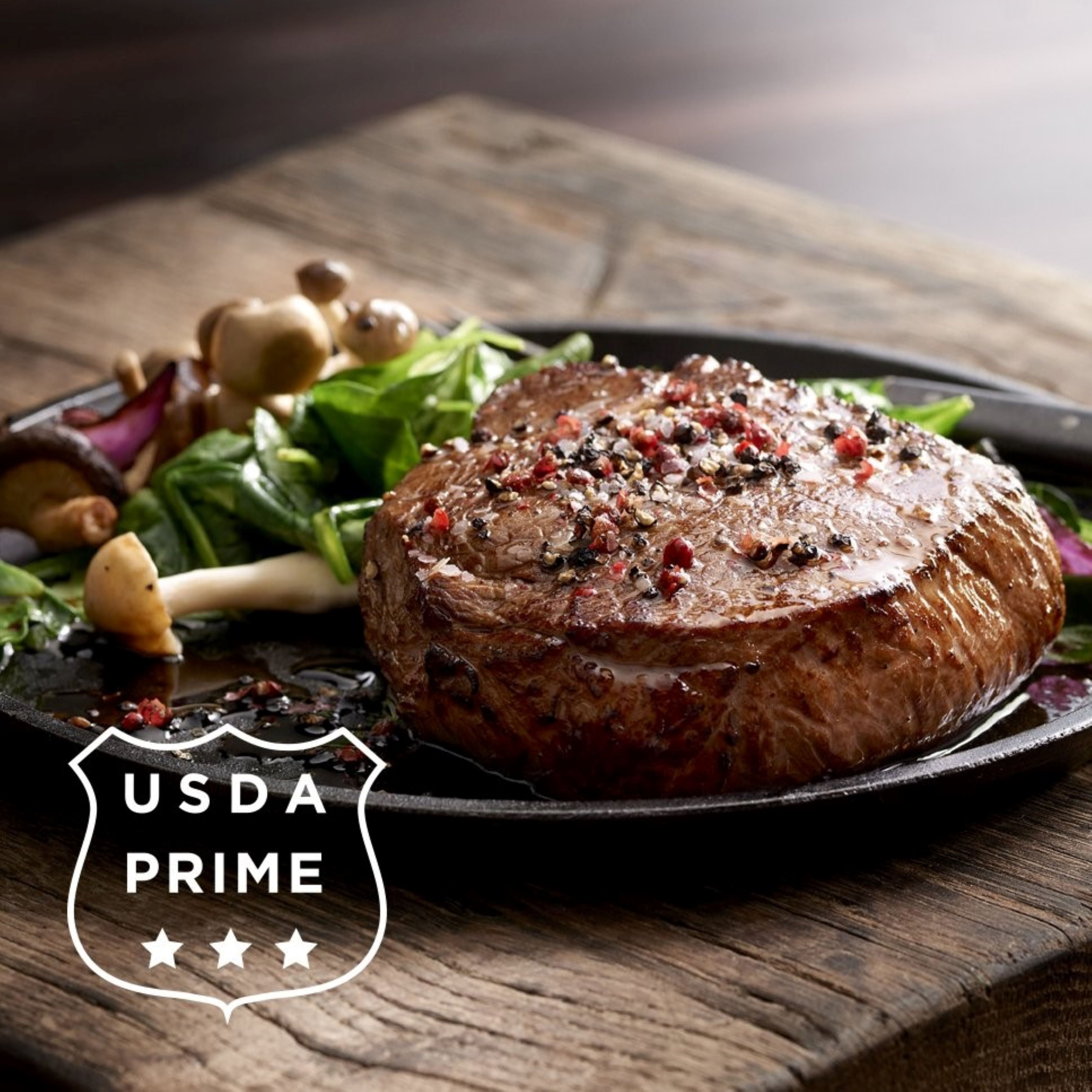
How To Cook New York Strip Steak
| Table of Contents |
|---|
| 1. What Makes New York Strip Special |
| 2. How to Choose and Prep |
| 3. Method 1: Pan-Seared |
| 4. Method 2: Reverse-Sear |
| 5. Method 3: How To Grill |
| 6. Method 4: Sous Vide |
| 7. Doneness Temps |
| 8. Medium-Rare Temp |
| 9. Common Mistakes |
| 10. Frequently Asked Questions |
Key Takeaways
- USDA Prime + 28-day wet aging = more forgiving to cook
- Prep: 1–1.5" thick, room temp 30–45 min, salt and pepper only
- Always rest, always use a thermometer

For anyone who wants to learn how to cook New York strip steak the way a steakhouse does, the answer isn't a secret ingredient. It's technique: the right cut, the right temperature, and a little patience at the end. This guide covers four reliable methods, including the resting step most home cooks skip.
New York strip earns its reputation honestly. It comes from the short loin, a section along the upper back that does very little work as the animal moves, so the meat stays tender without the heavy marbling of a ribeye. A USDA Prime grade, like the one on 44 Farms' New York strip, means beef graded for exceptional marbling and texture before it reaches your kitchen. Whether you're cooking a steak already in your freezer or deciding on a 44 Farms USDA Prime New York Strip for the weekend, here's how to cook a New York strip steak so it turns out right every time.
What Makes a New York Strip Special
Two things set a New York strip apart: where it comes from and how it's built.
The short loin sits along the back, between the ribs and the sirloin, in a spot that barely flexes during the animal's life. Less movement means less connective tissue, so the strip stays tender without the long cook times a tougher cut needs. It's leaner than a ribeye, with a thick fat cap along one edge rather than marbling threaded through the muscle, basting the meat as it renders for a more balanced, beefy flavor.
Grade matters just as much as the cut. USDA Prime is the highest quality grade the USDA issues, reserved for beef with the most abundant marbling and the best texture at that grade level. 44 Farms' New York strip is USDA Prime, Black Angus, wet-aged 28 days, and raised with no added hormones or antibiotics, which is why it's worth cooking properly rather than rushing.
Curious how it compares to another favorite? See New York Strip vs. Ribeye.

How To Choose and Prep Your Steak
Three things determine how your steak turns out before any pan or grill gets hot:
- Thickness: A strip between 1 and 1.5 inches thick gives the best shot at a well-browned crust and an evenly cooked center. Too thin, and steaks overcook before they brown; too thick, and you risk a gray band before the middle catches up.
- Temperature before cooking: Pull the steak from the refrigerator 30 to 45 minutes before cooking. Starting closer to room temperature cooks it more evenly, since the center isn't fighting its way up from cold while the surface is already searing.
-
Seasoning: Pat the steak completely dry, then season generously with kosher salt and coarse black pepper on both sides. Dry surface and well-seasoned crust; that's the whole formula. Skip marinades and heavy rubs on a Prime cut; you paid for the beef flavor.
There's no single best way to cook New York strip steak from here. Pan-searing, reverse searing, grilling, and sous vide all reach the same result through different routes, depending on your kitchen and how much control you want.
Method 1: Pan-Seared New York Strip
The fastest route to a steakhouse crust, and the method most home cooks reach for first.
- Heat a cast iron or heavy stainless skillet over high heat for 3 to 4 minutes, until it's smoking slightly. Add a high-smoke-point oil, such as 44 Farms Pecan Oil.
- Lay the steak in the pan and don't move it. Sear 3 to 4 minutes per side for a 1- to 1.25-inch steak, adjusting for thickness.
- In the last minute, add a tablespoon of butter, a smashed garlic clove, and a sprig of rosemary or thyme. Tilt the pan and spoon butter over the steak.
- Pull the steak 5 degrees below your target temperature and rest before slicing.
Pro tip: A hot, heavy pan and a dry surface build the crust; a crowded or lukewarm pan steams the meat instead.


Method 2: Reverse Sear New York Strip
The method that gives you the most control and is worth learning, especially for thicker steaks.
- Set your oven to 250 to 275°F. Place the seasoned steak on a wire rack over a baking sheet.
- Cook until the internal temperature reads about 15 degrees below your final target, checking with a thermometer starting around 20 minutes in. A 1.25-inch strip typically takes 25 to 40 minutes at this stage.
- Rest 5 minutes while a skillet heats over high heat.
- Sear 60 to 90 seconds per side to build the crust, basting with butter if you like, then rest briefly before slicing.
Pro tip: Because the steak is already near temperature going into the sear, this gives an edge-to-edge medium-rare with almost no gray band beneath the crust.
Method 3: How To Grill a New York Strip Steak
Bring a char that pan-searing can't fully replicate; it's the method most closely tied to steakhouse tradition.
- Preheat the grill to high heat, around 450 to 500°F at the grate. Clean and oil the grates.
- Place the steak over direct heat at a slight angle. Grill 3 to 4 minutes per side, flipping once, until the internal temperature hits your target.
- If flare-ups happen or the crust forms faster than the inside cooks, move the steak to indirect heat to finish.
- Rest off the grill for 5 to 10 minutes before slicing.
Pro tip: Direct high heat builds the crust, so resist moving the steak around. One flip per side, and let the grate do the work.


Method 4: Sous Vide New York Strip
The most precise method here is the least likely to overshoot your target doneness.
- Set the water bath to 130°F for medium-rare, or adjust to your target from the chart below.
- Season the steak, seal it in a vacuum bag or a zip-top bag using the water displacement method, and submerge it.
- Cook 1 to 2 hours. A New York strip is already tender, so it doesn't benefit from the extended cook times a tougher cut needs. Past about 4 hours, the texture starts to soften in a way that isn't an improvement.
- Remove the steak, pat it dry, and sear in a screaming-hot pan for 45 to 60 seconds per side to build color. No resting needed; it's already at temperature throughout.
Pro tip: Sous vide removes the guesswork around timing; the tradeoff is the extra equipment and a hard sear still required afterward.
44 Farms Angus Steaks Chef Video
This'll set your mouth to watering.
New York Strip Doneness Temps
Pull the steak off the heat before it hits your final target; it'll climb another 5 degrees or so while it rests.
| Doneness | Pull Temp | Rest to (Serving Temp) |
|---|---|---|
| Rare | 115°F | 120°F |
| Medium-Rare | 125°F | 130°F |
| Medium | 135°F | 140°F |
| Medium-Well | 145°F | 150°F |
| Well Done | 155°F | 160°F+ |
New York Strip Medium-Rare Temp (and Every Other Doneness Level)
Medium-rare, a serving temperature around 130°F, is the doneness most steakhouses default to for a Prime New York strip: warm through the center with a bright pink color, hot enough to render the fat cap without pushing the interior past the point where it stays juicy.
USDA Recommendation
For food safety, the USDA's minimum recommended internal temperature for whole cuts of beef is 145°F, measured with a food thermometer and followed by a 3-minute rest. Many cooks, including our own kitchen, serve New York strip closer to medium-rare for texture and flavor. That's a personal choice, not a safety recommendation, so use a thermometer rather than judging by color or touch.
How Long To Cook a New York Strip
It comes down to thickness and method more than the clock. A 1.25-inch strip runs roughly 6 to 8 minutes total for pan-searing or grilling, 30 to 45 minutes for reverse sear, and 1 to 2 hours for sous vide plus a quick sear.
Let It Rest: The Step That Matters
Resting isn't optional or just tradition. While a steak cooks, muscle fibers tighten and push moisture toward the center. Cutting in straight off the heat sends most of that moisture onto the cutting board instead of staying in the meat.
Rest pan-seared and grilled steaks 5 to 10 minutes. Reverse-seared steaks, already close to temperature, need only about 5 minutes. Sous-vide steaks don't need to rest at all, since the whole steak is already at a uniform temperature.
Tent loosely with foil if your kitchen is cold, and always slice against the grain. On a New York strip, the grain runs the length of the muscle, so cutting across it keeps each bite tender.
Common Mistakes to Avoid
If you're going to put the time and effort into cooking a beauty like this, mind that you don't:
- Cook straight from the fridge. A cold center cooks unevenly no matter the method.
- Skip the thermometer. Color and firmness are unreliable guides, especially on a Prime cut with more marbling than a leaner grade.
- Move the steak too much. Flip once per side. Constant flipping prevents the crust from forming.
- Cut in immediately. Even five minutes off the heat measurably changes how much juice stays in the steak.
-
Overcrowd the pan. Two steaks in a pan sized for one will steam rather than sear.
Order Your New York Strip From 44 Farms
A great method only goes as far as the steak underneath it. 44 Farms' USDA Prime New York Strip is Black Angus beef, wet-aged 28 days, with no added hormones or antibiotics, shipped frozen and vacuum-sealed to your door. Pick a method, follow the doneness chart, and let the steak do the rest, or start with our Simply Seared NY Strip recipe.
Shop All SteaksFrequently Asked Questions
What is the 3-3-3 rule for steaks?
This is a timing framework for a roughly 1-inch steak: sear each side 3 minutes over direct high heat, then shift to indirect heat and cook about 3 more minutes per side. It's a useful starting point, but a thermometer is still the more reliable way to hit exact doneness.
Is it better to bake or pan-fry a New York strip?
Pan-searing builds a better crust than baking alone, since direct contact with hot metal browns the surface faster than oven air does. Baking works well as the second half of a reverse sear, once the steak is most of the way to temperature. On its own, it produces a paler crust than a hot skillet or grill.
Is it better to cook a steak in the oven or on the stovetop?
Yes. Meaning both. The stovetop delivers the fast, high heat that builds a seared crust. The oven brings a thicker steak up to temperature gently and evenly, the idea behind reverse searing. Relying on just one gives up either the crust or the even cook.
Do you cook a New York strip fast or slow?
It depends on the method. Pan-searing and grilling are fast, high-heat methods built around a quick crust. Reverse sear and sous vide bring the steak up gradually before a fast finishing sear.