
How To Cook a Tomahawk Steak
| Table of Contents |
|---|
| 1. Before You Cook |
| 2. 3 Proven Methods |
| 3. Doneness Temperatures |
| 4. The Finishing Touch |
| 5. Slicing and Serving |
| 6. FAQs |

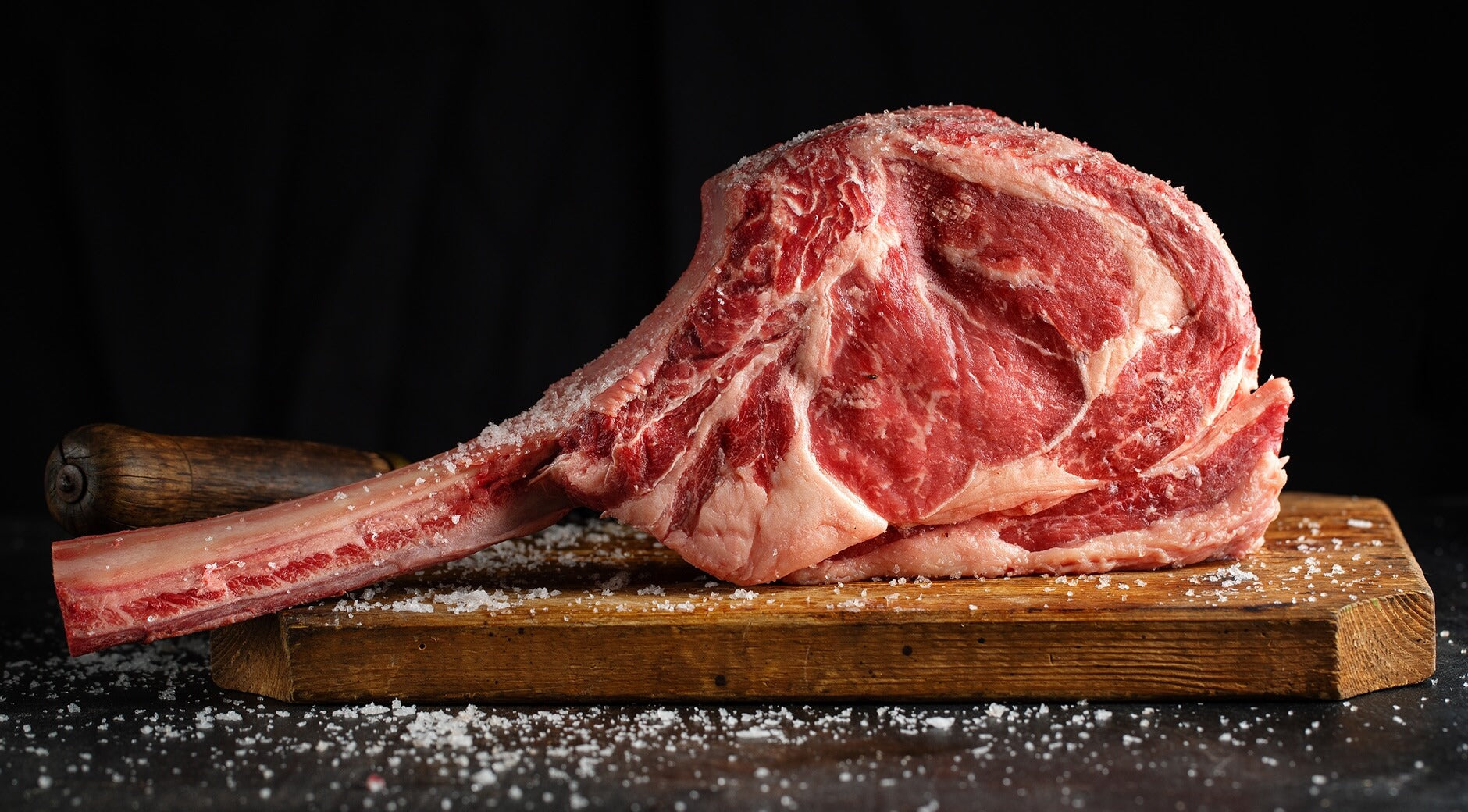
When a Tomahawk Ribeye hits the table, the room goes quiet. The long French-trimmed bone, the deep marbling, the sheer presence of the cut; it's a steak that earns its reputation before anyone takes a bite. The good news: learning how to cook a Tomahawk steak at home isn't complicated. With the right method and a little patience, you can pull off a steakhouse-caliber centerpiece right from your own grill or oven.
Here's exactly how we do it at 44 Farms. It's part of our ongoing Grill Skills series.
Before You Cook: The Prep That Matters
Great steak starts well before the heat. Here's how to set yourself up:
- Thaw fully in the refrigerator. Place your vacuum-sealed steak on a tray in the coldest part of the fridge for 24–36 hours. Never thaw at room temperature or in warm water.
- Temper the steak. Pull it from the fridge 30–45 minutes before cooking. A room-temperature steak cooks more evenly. That's critical for a cut this thick.
- Pat dry and season generously. Pat the surface bone-dry and season generously. Blot every side with paper towels until the steak feels dry to the touch. Surface moisture is the enemy of a good crust. Season aggressively with coarse kosher salt and freshly cracked black pepper, and don't forget the edges and the sides of the meat near the bone. For an even better crust, dry-brine by salting the steak uncovered in the fridge for several hours (or overnight) before cooking.
-
Have a meat thermometer ready. With a cut of this quality and thickness, guesswork isn't an option. An instant-read thermometer is a gotta-have.
How To Cook Tomahawk Steak: 3 Proven Methods
There's more than one right way to cook a Tomahawk, but every method follows the same principle: control the heat so the inside reaches your target temperature before the outside overcooks. Pick the method that matches your setup and the time you have on hand.

Method 1: Reverse Sear (Our Recommended Method)
The reverse sear is the gold standard for how to cook Tomahawk Ribeye. Low-and-slow first, blazing-hot finish, and you get a perfectly even interior with a crackling, mahogany crust.
- Preheat your grill or oven to 225°F, setting up a two-zone fire if grilling.
- Place the seasoned Tomahawk on the indirect side of the grill (or on a wire rack over a sheet pan in the oven).
- Cook low and slow until the internal temperature is 5°F shy of your target doneness (about 110°F for medium-rare). This typically takes 45–75 minutes, depending on thickness.
- Pull the steak and let it rest briefly while you crank your grill to high heat (500°F+) or heat a cast-iron skillet until smoking.
- Sear all sides, top, bottom, and edges, for 60–90 seconds each, until a deep crust forms.
- Rest for 10 minutes before slicing.
Method 2: Grill Over Direct Heat
If you're short on time and confident with your grill, you can cook a Tomahawk Ribeye from start to finish over fire. The key is two-zone cooking.
- Preheat your grill to high on one side, low on the other.
- Sear the steak over direct high heat for 3–4 minutes per side to build a crust.
- Move to the indirect zone, close the lid, and continue cooking until the internal temperature reaches 125°F for medium-rare (about 20–30 minutes).
- Pull, tent loosely with foil, and rest for 10–15 minutes.


No grill? No problem. This is the same logic as reverse sear, just flipped.
- Heat a heavy cast-iron skillet over high heat until smoking. Preheat your oven to 375°F.
- Add a splash of high-smoke-point oil and sear the steak for 3–4 minutes per side, plus 30 seconds on each edge.
- Transfer the entire skillet to the oven and roast until the internal temperature reaches 125°F for medium-rare, about 15–25 minutes depending on thickness.
- Rest for 10–15 minutes before serving.
Doneness Temperatures (Pull 5°F Early)
Carryover heat will continue cooking the steak as it rests. Always pull about 5°F before your target.
- Rare: 120°F
- Medium-rare: 120–125°F (recommended for Tomahawk)
- Medium: 135°F
- Medium-well: 145°F
Because of the Tomahawk's marbling, medium-rare to medium is where this cut truly shines.
The Finishing Touch: Cowboy Butter
For a true steakhouse moment, top your sliced Tomahawk with a spoonful of cowboy butter. This rich compound butter is made with softened butter, minced garlic, green onion, parsley, lemon zest, Meat Church Holy Cow, red pepper flakes, paprika, chili powder, thyme, and a touch of Dijon mustard. Mix everything together while the steak rests, then let it melt over the warm slices just before serving.
Slicing and Serving
Once rested, lift the steak onto a cutting board. Run a sharp knife along the bone to separate the meat, then slice across the grain into 1/2-inch strips. Fan the slices back around the bone for that dramatic table presentation, finish with a pinch of flaky sea salt, and pair with simple sides, such as grilled asparagus, creamy mashed potatoes, charred broccolini, or a wedge salad. Let the beef be the star.
Cooking the Perfect Tomahawk Steak
Our friend, Matt Pittman of Meat Church, walks you through cooking a Tomahawk step-by-step right on the product page, where you'll also find his Meat Church Holy Cow Seasoning, a 44 Farms favorite for this cut.
Start With the Beef Worth the Effort
A steak this size is only as good as the beef itself. 44 Farms' USDA Choice Tomahawk Ribeye is hand-cut from ethically raised, all-natural Black Angus beef from our Cameron, Texas, ranch. No added hormones, no antibiotics, and wet-aged a minimum of 28 days for tenderness and flavor. Five generations of ranching tradition go into every cut, and it's backed by our 100% satisfaction guarantee.
Order your Tomahawk RibeyeTomahawk Steak FAQs
How much Tomahawk steak should I plan per person?
A Tomahawk's total weight includes a big rib bone, so the edible yield is less than the package weight suggests. As a general rule, plan on one Tomahawk serving 2 adults as a shared centerpiece, or 3 when paired with generous sides. It's a sharing steak by design, meant to be sliced and served family-style.
What's the difference between a Tomahawk and a Cowboy steak?
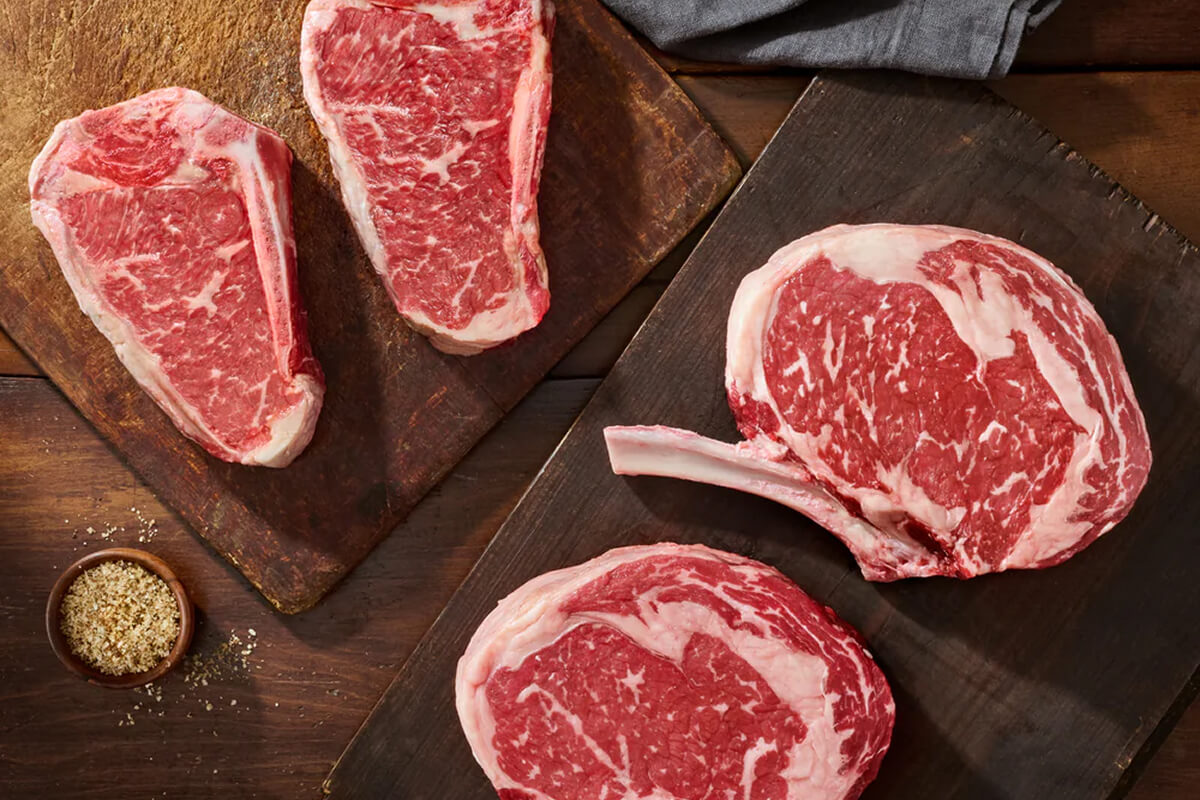
Both are bone-in ribeyes, but the bone length is the giveaway. A Cowboy steak has a short, Frenched bone (a few inches at most), while a Tomahawk keeps the full rib bone intact, typically 6 inches or longer, for that signature axe-handle presentation.
Should I wrap the bone in foil while cooking?
You can, and many chefs do. Wrapping the exposed bone in aluminum foil prevents it from charring black over high heat, keeping that clean ivory color that makes the Tomahawk such a striking presentation piece. It's purely cosmetic; it won't affect flavor.
Is the bone edible, and what should I do with it after?
The bone itself isn't edible, but it's far from waste. Save it to make a rich, deeply flavored beef stock. The marrow and connective tissue surrounding the bone make some of the best broth you'll ever cook with. (Skip giving cooked bones to pets; they can splinter.)

Leave a comment
This site is protected by hCaptcha and the hCaptcha Privacy Policy and Terms of Service apply.