
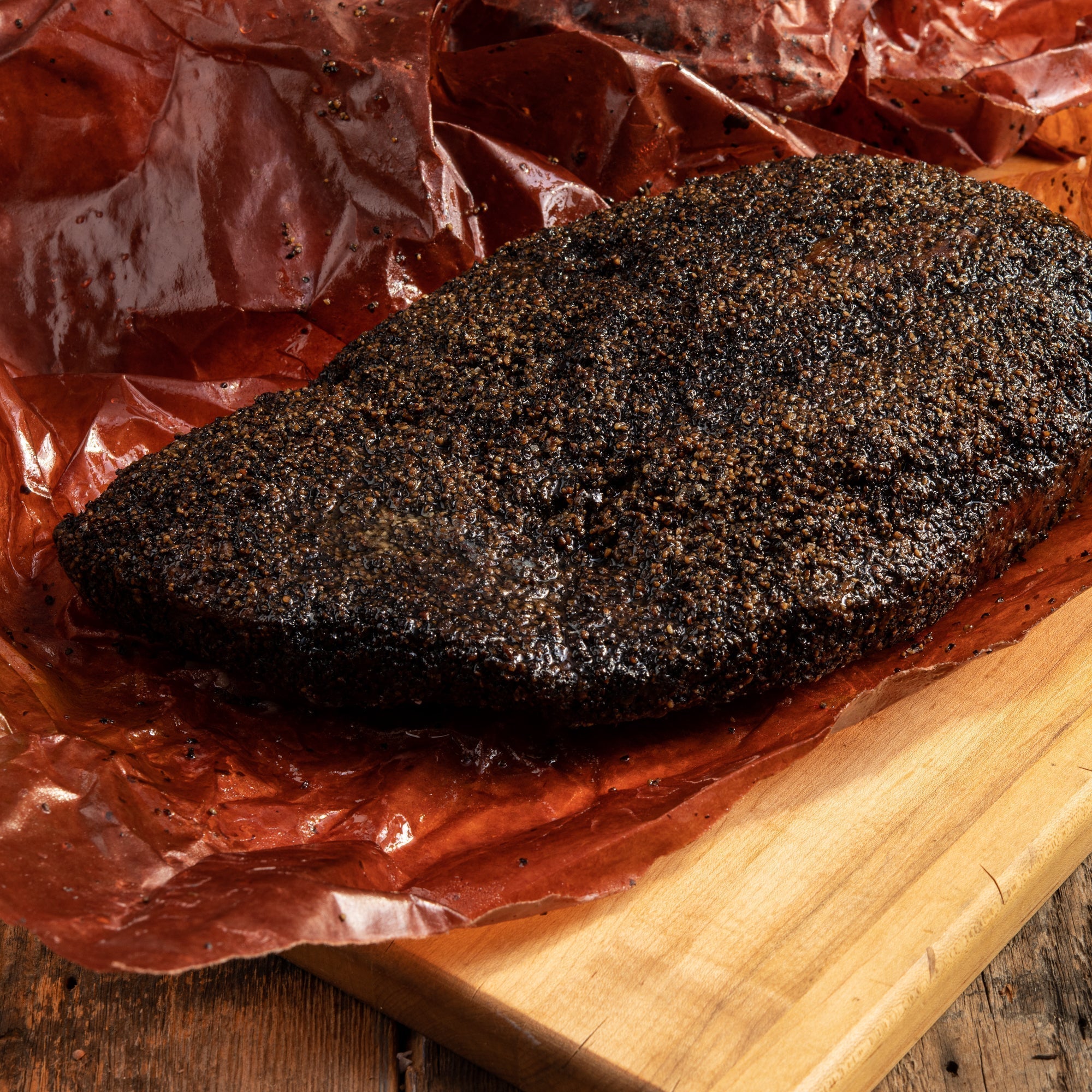
How to Smoke Texas-Style Brisket: Trim, Season, Smoke & Rest
Quick Answer (TL;DR):
-
Trim: Leave ~¼" fat cap; square edges.
-
Smoke: 250°F with post oak; fat cap down to protect the flat.
-
Wrap: When bark is set and internal hits ~165°F (usually 4–7 hrs), wrap in butcher paper.
-
Finish: Cook to probe-tender (~200–205°F internal).
-
Rest: 2–4 hours (faux cambro/cooler).
-
Slice: Across the grain; separate flat/point and switch grain direction mid-slice.
Table of Contents
• What Makes Texas-Style Brisket Different
• What You Need to Smoke Brisket
• Step-by-Step Texas Brisket Method
• What Temperature to Smoke Brisket
• When to Wrap Brisket
• How Long to Rest Brisket
• How to Slice Brisket
• FAQs
Why Brisket, and Why Texas-Style?
In Texas, brisket is the main event—no sugar rubs, no heavy sauces, just beef, smoke, and patience. The magic is letting premium beef do the talking. With 44 Farms USDA Prime & Choice Angus briskets (all-natural, no added hormones or antibiotics), you start with generous marbling and consistent size, which makes the cook more forgiving and the slices more juicy.
• Shop USDA Prime Brisket
• USDA Beef Grades: Choice vs. Prime
• Shop Beef Tallow (for wrapping or finishing)
Brisket Temperature Guide
| Stage | Internal Temp | What’s Happening |
|---|---|---|
| Smoke begins | 40–120°F | Meat absorbs smoke |
| Bark forming | 120–150°F | Surface dries |
| The stall | 150–170°F | Evaporation slows cooking |
| Wrap | ~165°F | Speeds cooking |
| Done | 200–205°F | Collagen fully rendered |
Brisket is typically finished when it reaches 200–205°F and feels probe-tender.
How Long Does It Take to Smoke Brisket?
At 250°F, plan roughly:
-
1–1.25 hours per pound
Example:
| Brisket Weight | Cook Time |
|---|---|
| 10 lb | 10–12 hours |
| 12 lb | 12–15 hours |
| 15 lb | 15–18 hours |
What You’ll Need
Equipment
-
Offset, pellet, or ceramic smoker (steady at 250°F)
-
Two good thermometers (grate temp + meat probe)
-
Boning knife for trimming
-
Peach butcher paper (or foil) & towels
-
Cooler for resting (faux cambro)
Ingredients
-
44 Farms USDA Prime Brisket (9–15 lbs is the typical range of Brisket that we sell.)
-
Optional: water/Apple Cider Vinegar spritz, 44 Farms Beef Tallow (light smear before wrap)
Step 1: Trim for Even Cooking
-
Chill the brisket slightly for cleaner cuts.
-
Square ragged edges that can burn.
-
Fat cap: trim to ~¼". Remove hard, waxy fat that won’t render.
-
On the meat side, remove silver skin so rub sticks and smoke penetrates.
Why it matters: Even aerodynamics = even cooking; too much fat blocks smoke and seasoning.
Step 2: Season Simply and Generously
-
Coat all sides evenly; don’t be shy.
-
Let it sit while you stabilize the pit at 250°F.
Texas truth: Simplicity lets marbling and smoke lead the flavor.
Step 3: Fire, Wood, and Orientation
-
Run your smoker at a steady 250°F.
-
Wood: Post oak or pecan is classic; hickory works; mesquite sparingly.
-
Place the brisket fat cap down to shield the flat from radiant heat (pellet/gravity: choose the side that faces the heat source).
Target smoke: Clean, nearly invisible blue; if it’s billowing white, your fire needs more airflow or drier splits.
Step 4: Ride the Stall, Don’t Fight It
-
Spritz lightly (water or 50/50 water + apple cider vinegar) only if the surface looks dry and the bark is forming.
-
Around 150–170°F internal, moisture evaporation slows the rise—this is “the stall.”
Patience tip: The stall is normal. Use it to build bark.
Step 5: Wrap at the Right Time (Not Just the Right Temp)
-
When bark is set (rub doesn’t wipe off, surface is mahogany and lightly tacky), and internal is around 165°F, wrap in butcher paper.
-
Optional: brush a thin layer of 44 Farms Angus beef tallow on the paper for a silkier mouthfeel.
Why paper over foil? Paper breathes, protecting bark texture while speeding past the stall.
Step 6: Finish to Probe-Tender
-
Keep pit ~250°F until the thickest part of the flat reads 200–205°F and a probe slides in with butter-like resistance.
-
Don’t chase a single temperature—feel beats numbers.
Time guide: 45–75 minutes per pound at 250°F (very brisket-dependent). A 14-lb brisket often runs 10–16 hours total.
Step 7: Rest Like a Pitmaster
-
Vent steam briefly (2–3 minutes), rewrap, swaddle in towels, and place in a warmed cooler (faux cambro) 2–4 hours.
-
Resting redistributes juices and relaxes connective tissue for cleaner slices.
Step 8: Slice for Maximum Tenderness
-
Separate the point from the flat along the fat seam.
-
Slice the flat across the grain into pencil-thick slices.
-
Rotate the point (grain changes direction) and slice across the new grain.
-
Save ends for burnt ends or breakfast tacos.
Serve with: Pickles, onions, and white bread—or just a knife and silence.
Prime vs. Choice Brisket (Quick Contrast)
| Grade | Marbling | Cook Window | Juiciness | Who It’s For |
|---|---|---|---|---|
| USDA Prime | Abundant | Wider (more forgiving) | Max | Big flavor seekers, show-stoppers |
| USDA Choice | Moderate-High | Slightly narrower | Excellent | Everyday pitmasters, leaner budget |
Shop USDA Prime Brisket • All-Natural Standards (No Added Hormones or Antibiotics)
Troubleshooting & Pro Tips
-
Dry flat? Trimmed too lean, ran too hot, or under-rested. Next time leave ¼" cap and extend the rest.
-
Soft bark? Wrapped too early or used foil. Let bark set before wrapping; stick with paper.
-
Bitter smoke? Fire was dirty. Use dry wood, open vents for clean combustion.
-
Underdone at 200°F? Go by probe feel, not just temp. Some briskets finish tender at 203°F, others at 208°F.
FAQ
Is fat cap up or down?
Down, to shield the flat from radiant heat (most pits). If your heat source is above, reverse it.
When should I wrap?
When bark is set and internal is ~165°F—timing varies with pit humidity and airflow.
What temp is brisket done?
When it’s probe-tender (usually 200–205°F). Feel > number.
How long should I rest brisket?
Minimum 1.5 hours; ideal 2–4 hours in a warm cooler.
What wood is best?
Post oak or Pecan is classic Texas; hickory is fine; use mesquite sparingly to avoid bitterness.
Links
Ready to smoke the real deal?
:%0A%0A%0ATrim:%20Leave%20~%C2%BC%22%20fat%20cap;%20square%20edges.%0A%0A%0ASeason:%C2%A044%20Farms%20Black%20Pepper%20Infused%20Salt%20Blend%0A%0A%0ASmoke:%20250%C2%B0F%20with%20post%20oak;%20fat%20cap%20down%20to%20protect%20the%20flat.%0A%0A%0AWrap:%20When%20bark%20i...)
Leave a comment
This site is protected by hCaptcha and the hCaptcha Privacy Policy and Terms of Service apply.