How to Cook Prime Rib in the Oven

Some meals are just meals. And then there's prime rib. There's something about pulling a bone-in roast out of the oven, that deep mahogany crust, the rich smell filling every corner of the house, the way everyone goes quiet when it hits the table, that turns a dinner into a memory. Learning how to cook prime rib is one of those kitchen skills that pays off for the rest of your life, and it's more approachable than most people think.
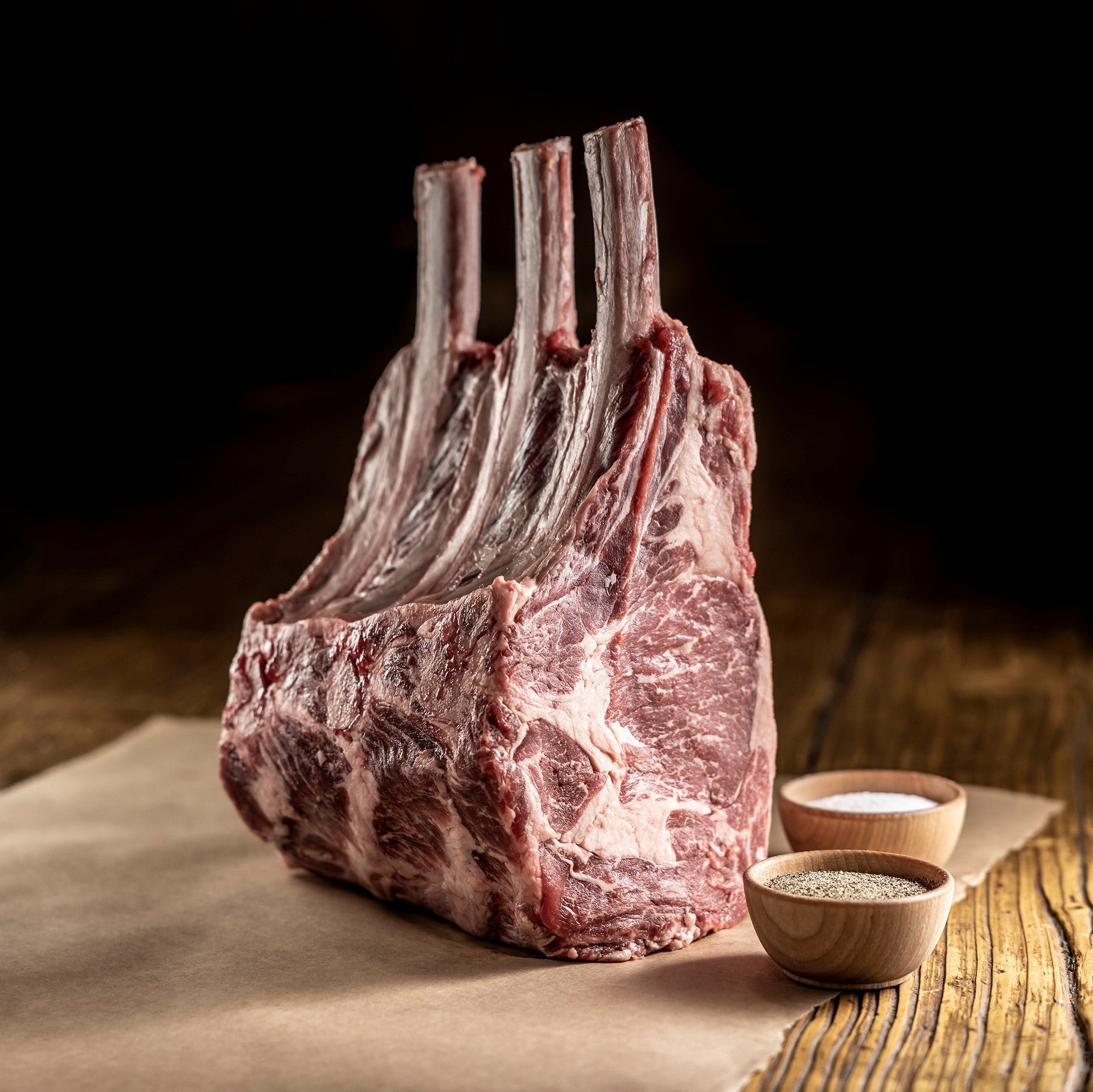
We're building this prime rib recipe around the 44 Farms Tomahawk Prime Rib Roast, a three-bone, USDA Choice Black Angus beauty that weighs in around 7 pounds and arrives wet-aged for a minimum of 28 days. That aging process matters. It means the naturally occurring enzymes have already been tenderizing the muscle fibers, the beefy flavor has deepened, and you're starting from a place of advantage before the roast ever sees the inside of your oven. This isn't commodity beef. It's all-natural Black Angus, pasture-raised and grain-finished in Cameron, Texas, with no hormones, antibiotics, or feed additives of any kind. When you put this much care into sourcing the right cut, the cooking should honor it.
Let's do it right.
Prime Rib Recipe: What You'll Need
The Star of the Show
44 Farms Tomahawk Prime Rib Roast (~7 lbs, three-bone, bone-in)
For the Dry Brine & Crust
2 tablespoons kosher salt
1 tablespoon coarse black pepper
1 tablespoon garlic powder
1 teaspoon fresh rosemary, finely minced (or 1/2 tsp dried)
1 teaspoon fresh thyme, finely minced (or 1/2 tsp dried)
2 tablespoons olive oil or softened unsalted butter
Equipment
- Roasting pan with a rack
- Instant-read meat thermometer (non-negotiable)
- Aluminum foil
- Butcher's twine (optional, for tying the bones back if French-trimmed)
Before You Cook: Thaw & Dry Brine (The Step Most People Skip)
Your 44 Farms Tomahawk Roast ships vacuum sealed and frozen over dry ice via FedEx 1–2 day shipping. Once it arrives, give it 48–72 hours to thaw in the refrigerator. Larger cuts like prime rib can take a full extra day beyond what a standard steak needs. Never thaw on the counter or in warm water; keep it at or below 40°F the whole time. Once thawed, the roast can be safely held in the refrigerator for an additional 3 to 5 days before cooking.
When you're ready to start prep, pat the entire surface completely dry with paper towels. This is the step that separates a good crust from a great one.
Dry Brining (Strongly Recommended)
At least 1 hour before cooking, and ideally the night before, mix your salt, pepper, garlic powder, rosemary, and thyme together. Rub the entire roast generously with olive oil or softened butter, then apply the seasoning blend all over the surface, including the bones and the underside. Place it fat-cap up on a rack set over a baking sheet and leave it uncovered in the refrigerator. Overnight dry brining draws out a small amount of surface moisture, which then gets reabsorbed, seasoning the meat from within and setting up that crust you're after.
When you're ready to cook, pull the roast from the fridge and let it sit at room temperature for at least 1 hour. A cold roast cooks unevenly. Don't skip this.
Optional: Tying the Roast
If the rib bones on your Tomahawk Roast have been separated from the eye of meat during French-trimming, use butcher's twine to tie them back against the roast before seasoning. Loop the twine between each bone and tie it snugly. This holds the roast together during cooking and helps it retain its shape for a cleaner presentation when carving. If the bones are still fully attached, skip this step entirely.
How To Cook Prime Rib in the Oven: Step-by-Step
Step 1: Preheat Your Oven for the Sear
Preheat your oven to 500°F (or as high as your oven will go, up to 500°F). Position your oven rack in the lower third of the oven. You want the heat circulating around the roast, not blasting the top. Place your room-temperature, seasoned roast fat-cap side up on the roasting rack inside your pan. The bones act as a natural rack, elevating the meat and allowing heat to circulate underneath. This is one of the big reasons bone-in roasts cook so beautifully.
Step 2: High-Heat Sear (The Crust Builder)
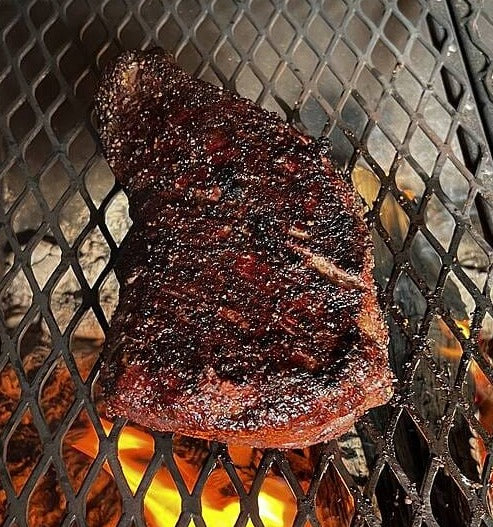
Slide the roast into your 500°F oven and let it roast at this high heat for 15–20 minutes. You're not cooking the beef here, you're building the crust. The Maillard reaction (the browning process) is happening right now, developing the deep, complex flavors that make this a showstopper. You'll hear some sizzling. That's good. Don't open the oven.
Step 3: Drop the Temperature & Roast Low and Slow
After the initial sear, reduce the oven temperature to 325°F and continue roasting. This is where the prime rib cooking time comes in.
General prime rib cooking time guide at 325°F (bone-in, ~7 lbs):
- Rare (120–125°F): approximately 13–15 minutes per pound
- Medium-Rare (130–135°F): approximately 15–17 minutes per pound (This is the sweet spot for this cut)
- Medium (140–145°F): approximately 17–19 minutes per pound
For a 7-pound roast targeting medium-rare, plan on roughly 2 to 2.5 hours of total oven time after the initial sear. Every oven is different, every roast is slightly different, and time is just an estimate. Your thermometer is the authority.
Step 4: Start Checking Internal Temperature Early
Begin checking the internal temperature about 45 minutes before you think it'll be done. Insert your instant-read thermometer into the thickest part of the meat, away from any bones (bones conduct heat faster and will give you a falsely high reading). Pull the roast when it hits about 5°F below your target temperature. The roast will continue cooking during the rest period.
- Pull for rare: 115–120°F
- Pull for medium-rare: 125–130°F (recommended)
- Pull for medium: 135–140°F
Step 5: Rest It
Transfer the roast to a cutting board and tent it loosely with aluminum foil. Let it rest for at least 30 minutes, and up to 45 minutes for a roast this size. The residual heat continues to gently cook the interior (it'll climb another 5–8°F), and the muscle fibers relax and reabsorb their juices. Cut into it too early, and those juices end up on your cutting board instead of in every bite. This is the patience part. Pour yourself something nice and wait.
Step 6: Carve & Serve
To carve the roast, start by slicing along the bones to separate them from the meat as one piece — this makes for easier slicing and also gives someone at the table a magnificent prize. Then slice the roast into your desired thickness. For prime rib, 3/4-inch to 1-inch slices are classic. Cut across the grain for the most tender bite.
What to Serve With Prime Rib
A roast this good deserves equally thoughtful sides. Classic pairings include:
- Au jus made from the pan drippings (deglaze with beef broth and a splash of red wine)
- Creamy horseradish sauce (mix prepared horseradish, sour cream, Dijon mustard, and a pinch of salt)
- Garlic mashed potatoes or a crispy potato gratin
- Roasted asparagus or green beans with almonds
- Yorkshire pudding, if you're feeling ambitious
For more inspiration, check out the 44 Farms Prime Rib Sauce Trio recipe, three from-scratch sauces cooked up especially for prime rib.
Tips for the Best Prime Rib
For best results, stick to these prime rib must-dos and don'ts:
- Don't skip the dry brine. Even a 1-hour dry brine makes a noticeable difference in crust development and flavor penetration. Overnight is better.
- Bone-in beats boneless. The bones insulate the meat during cooking, resulting in more even heat distribution and a juicier roast. The 44 Farms Tomahawk Roast's French-trimmed rib bones also add a visual drama that's hard to beat.
- Your thermometer is your best friend. If you don't have an instant-read thermometer, get one. A $20 investment is the difference between a perfect prime rib roast recipe and an overcooked disappointment.
- Fat cap = flavor. The 44 Farms Tomahawk Roast has beautiful fat marbling from top to bottom — a hallmark of USDA Choice Black Angus beef. Cook it fat-cap up so it bastes the meat as it renders. Don't trim it before cooking.
- Use the drippings. The liquid gold that collects in your roasting pan is the base for the best au jus you've ever had. Don't waste a drop.
Why the Cut Matters: 44 Farms Tomahawk Prime Rib Roast
Here's the honest truth about the best prime rib recipe: the cooking technique matters, but the beef matters more. You can nail every step perfectly, but if you start with a mediocre roast, you'll get mediocre results.
The 44 Farms Tomahawk Prime Rib Roast is USDA Choice Black Angus beef, wet-aged for a minimum of 28 days, sourced from cattle that are pasture-raised and grain-finished on fertile land near Cameron, Texas. The operation has been running for over 100 years. Now in its fifth generation, 44 Farms holds USDA Certified Program status. The cattle are raised under the NE3 (Never Ever) commitment: no growth hormones, no antibiotics, no animal byproducts or feed additives of any kind. What you're getting is beef that's worthy of the occasion.
The three-bone tomahawk cut, with those dramatic long rib bones left intact and French-trimmed, isn't just a showpiece. The bones contribute to flavor, act as a natural rack, and protect the meat from drying out during the long roast. At approximately 7 pounds, this roast comfortably serves 6 to 8 people, making it the best way to cook prime rib for a holiday dinner or any celebration that deserves the full treatment.
Order Your 44 Farms Tomahawk Prime Rib Roast
The holidays. A birthday. A Sunday when you decide the people you love deserve something extraordinary. Whatever the occasion, this is the roast you bring out when the moment calls for it. Once you know how to make prime rib with 44 Farms' Tomahawk Prime Rib Roast, there's no going back.
Order Your Roast
Frequently Asked Questions
Should I cook prime rib covered or uncovered?
Uncovered, always. Covering the roast traps steam, which prevents crust formation and can result in a steamed texture instead of a roasted one. Tent it loosely with foil only after it comes out of the oven during the resting period.
What's the difference between prime rib and a ribeye roast?
They're the same cut: the rib section (ribs 6–12) of the cow, just named differently based on context. "Prime rib" refers to a bone-in rib roast cooked whole and served as thick slices with au jus. "Ribeye roast" refers to the boneless version. The 44 Farms Tomahawk Roast is a bone-in ribeye roast, which is why it's sold as both a ribeye roast and prime rib. And, for the record, "prime" in "prime rib" is a historical reference to the cut, not necessarily the USDA grade, though the richly marbled beef you get from 44 Farms is USDA Choice or higher.
Why does my prime rib come out gray in the middle instead of pink?
This almost always comes down to one of three things: the oven temperature was too high for too long, the roast went in too cold (straight from the fridge), or the internal temperature was checked too late. Let the roast come to room temperature for at least an hour before cooking, use a reliable thermometer, and pull it 5°F before your target. The carryover cooking during rest will finish the job. A properly rested medium-rare prime rib should be a vivid, rosy pink from edge to edge.
What does "wet-aged for 28 days" mean, and why does it matter?
Wet aging means the beef is vacuum-sealed right after processing and aged in its own natural juices under refrigeration. According to 44 Farms, this process gives naturally occurring enzymes time to tenderize the meat while it's in transit, and because the beef stays sealed, there's no weight loss from dehydration (unlike dry aging). All 44 Farms steaks and roasts are wet-aged for a minimum of 28 days, which means noticeably more tender, more flavorful beef compared to fresh-cut product.


Leave a comment
This site is protected by hCaptcha and the hCaptcha Privacy Policy and Terms of Service apply.